Thursday, April 11, 2019

Poetry and ELLs

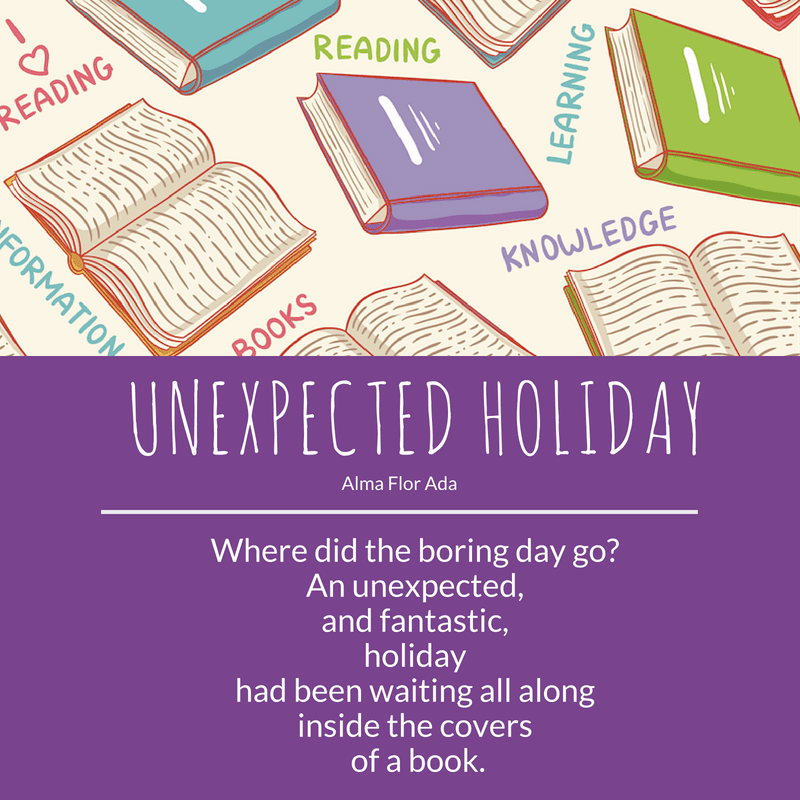
Every year in April (National Poetry Month) I teach poetry to my kindergarten, first grade, and second grade students.  I have several resources that I use to make this grade level specific and to help my ELLs write their own poems and poetry.  This is a fun unit that I look forward to each spring!  Here are some of the resources that I use.

Poetry/Poems Resources:


Building Background - Chapter 5 EL Excellence Every Day

We build background knowledge and help students connect to prior knowledge to help them learn new concepts, make meaning from texts, and succeed with classroom tasks.

We build background in concepts, in language, and often in both at the same time.

Here are some strategies to build background knowledge:

  • build upon students' prior knowledge and experiences
  • build new background knowledge important to what you teach
  • model what you expect students to do and how to do it
  • pre-teach vocabulary for a text or a task
  • pre-teach language for a text or a task

Do not rob students of productive struggle.  Building background knowledge prepares students for success.  Too much of a good thing can also have a negative effect.


Excellent article about building background with ELLs:

https://www.k5chalkbox.com/building-background-knowledge.html

Wednesday, April 10, 2019

Takeaways from Section 3 of EL Excellence Every Day Teacher Book Club

Here are the takeaways from section 3 of the book:


  1. We must meet children where they are, we must understand them well to teach them well, and we must offer the right amount of supports and challenges to grow. (Jennifer Serravallo 2015, p. 19).
  2. If we overmodel, overguide, and overscaffold, we hinder student thinking and self-directed learning.
  3. We must get specific about our goal and where students are in relation to our goals and then choose, lose, or adapt supports according to each students' assets and needs.
  4. To support ELs strategically, in ways that accelerate rather than remediate their learning, it is critical that we choose and lose supports within the context of reflective teaching.
  5. Thriving with content learning means excelling with the high expectations we have for all learners to excel with our content learning experiences.
  6. Content learning supports for ELs include building background knowledge, modeling, using graphic organizers, and structuring collaborative conversations to deepen thinking.
  7. Learning language for success within school means developing and using the academic language essential for listening, speaking, reading, and writing across the curriculum.
  8. Language supports are linguistics supports.
  9. Example of linguistic supports include teaching vocabulary, teaching how language is used in a text, scaffolding language use with linguistic frames or word banks, ad structuring conversations to develop oral academic language in meaningful ways.  
  10. Language is more than vocabulary and grammar.
  11. Teaching language in isolation from rigorous academic content literacy won't empower ELs with the language they need to thrive with rigorous academic content literacy. 
  12. To learn academic language, ELs need opportunities to actively participate in meaningful, high-level learning and communication in core classrooms.  
  13. ELs benefit from language teaching and scaffolds that help them make meaning from complexity and communicate effectively in academic conversations and tasks across the curriculum.  
  14. Student use receptive and productive language in every classroom, every day.
  15. The ultimate goal of supporting ELs with language is to help ELs thrive across all the domains of speaking, listening, reading, and writing in diverse academic contexts.
  16. The best lessons and best language-learning opportunities engage students in using productive and receptive language in synthesis to communicate.
  17. The best way to build academic language is within the context of academic learning and academic communication.
  18. There is no go-to support that works for every student, every time.
  19. The gold standard for using supports strategically is engaging students at the optimal level of challenge.
  20. Use scaffolds and supports to help stretch students to learn beyond what they already know and can do.
  21. Remove scaffolds and supports any time students will be able to realize their own success via problem solving, productive struggle, and self-directed learning.
  22. Too many supports all of the time lead to passive learners dependent on teacher direction.
  23. Too few supports can lead to students failing and disengaging from school.
  24. Every need we observe within a lesson helps us anticipate the best level of supports in future lessons.
  25. Student writing is a great snapshot in language.
  26. The ideal linguistic scaffolds are ones we co-create with our students to build on the strong language choices to help them use language in new, more nuanced ways.
  27. Humility and inquiry are all part of the process if using scaffolds strategically so ELs thrive.
  28. Scheduled small-group instruction is powerful, especially as a go-to routine in literacy to ensure all students get to engage with texts at their optimal reading levels.
  29. When we get specific about what each level of support means for individual supports, we start to see that this continuum of supports also is relevant to our non-ELs.
  30. Modeling is only one of many supports on our tool kit for EL excellence.
  31. The just-right levels for each support will always change, as you goals and tasks change and as your students continue to learn and grow.

Takeaways From EL Excellence Every Day Book Club

Here are the takeaways from the second section of the book:

  1. When kids are engaged, when they are active co-constructors of their knowledge, then they are more likely to take ownership, to discover relevance, and to ask why and why not; they are more likely to feel inspired when they realize their voice matters and their questions count more than their answers. ~~Kylenn Beers & Robert e. Probst (2013, p. 27)
  2. Internal experiences include students' thoughts and feelings. Active participation is what students do to engage in tasks. Both are important for engaging ELs in core classrooms.
  3. Internal engagement is really the most important engagement as it is, in a nutshell, learning.
  4. Students do not just sit and listen to the teacher but actively participate in lesson tasks.
  5. Structuring active participation for all students is especially important in classrooms with ELs.
  6. For deep engagement, always structure active participation in tandem with relevant texts, tasks, and topics!
  7. Peer conversations are the most important strategy for everyday excellence with ELs.
  8. Peer conversation structures put all in the active role of doing the thinking, talking, and responding to the tasks in our lessons.
  9. Every time we ask questions and wait for volunteers, we widen the opportunity gap for ELs, for students who struggle with what we are teaching, and for any students who are hesitant to take social roles.
  10. Daily opportunities to discuss academic ideas are essential for building academic language.
  11. ELs need daily opportunities to take risks with language, make mistakes, and learn from the valuable feedback of real-world communication.
  12. Every teacher can shift this trend by integrating conversations into academic lessons and using peer conversation structures to support and ensure active, equitable participation of all students.
  13. Foster risk taking by giving students opportunities to build up ideas one-on-one with peers before sharing with the whole class.
  14. Regular peer conversations in tandem with feedback help even the most reluctant participant to take new risks speaking in class. 

Tuesday, April 9, 2019

Take Aways from Teacher Book Study - EL Excellence Every Day

So far these are the take-aways I have from the first section of the book study:


  1. The need to differentiate teaching is real in any classroom, whether or not we have English Learners (ELs) in our class.
  2. Collaborative conversations benefit everyone every day.
  3. ELs need teachers who understand the assets multilingual students bring to their learning and who can build on ELs linguistic, cultural, and academic strengths.
  4. One easy and essential way to value students' diverse backgrounds is to pronounce students' names the say way their families pronounce their names.  This is critically important as our names are our identities.  We create a disconnect between family and home and school when we mispronounce a student's name. 
  5. Seek to understand culture beyond heroes and holidays.
  6. Our diverse students'  knowledge and linguistic abilities are assets that should be integrated into how and what we teach.  
  7. Learn what students know and can do in their primary languages(s).
  8. Structure collaborative conversations daily in your teaching routines that invite not one right answer but diverse perspectives about texts students read and concepts you teach.
  9. With genuine interests in learning the language, without putting students on the spot, create opportunities for ELs to teach words or phrases in their language to you and.or to peers.  
  10. Choose enabling texts for your classroom library and teaching.
  11. Students rise or fall to the level of teacher expectations.
  12. Be specific about your goals for student learning.

Saturday, March 16, 2019

Poetry and ELLs

Every year in April (National Poetry Month) I teach poetry to my kindergarten, first grade, and second grade students.  I have several resou...